
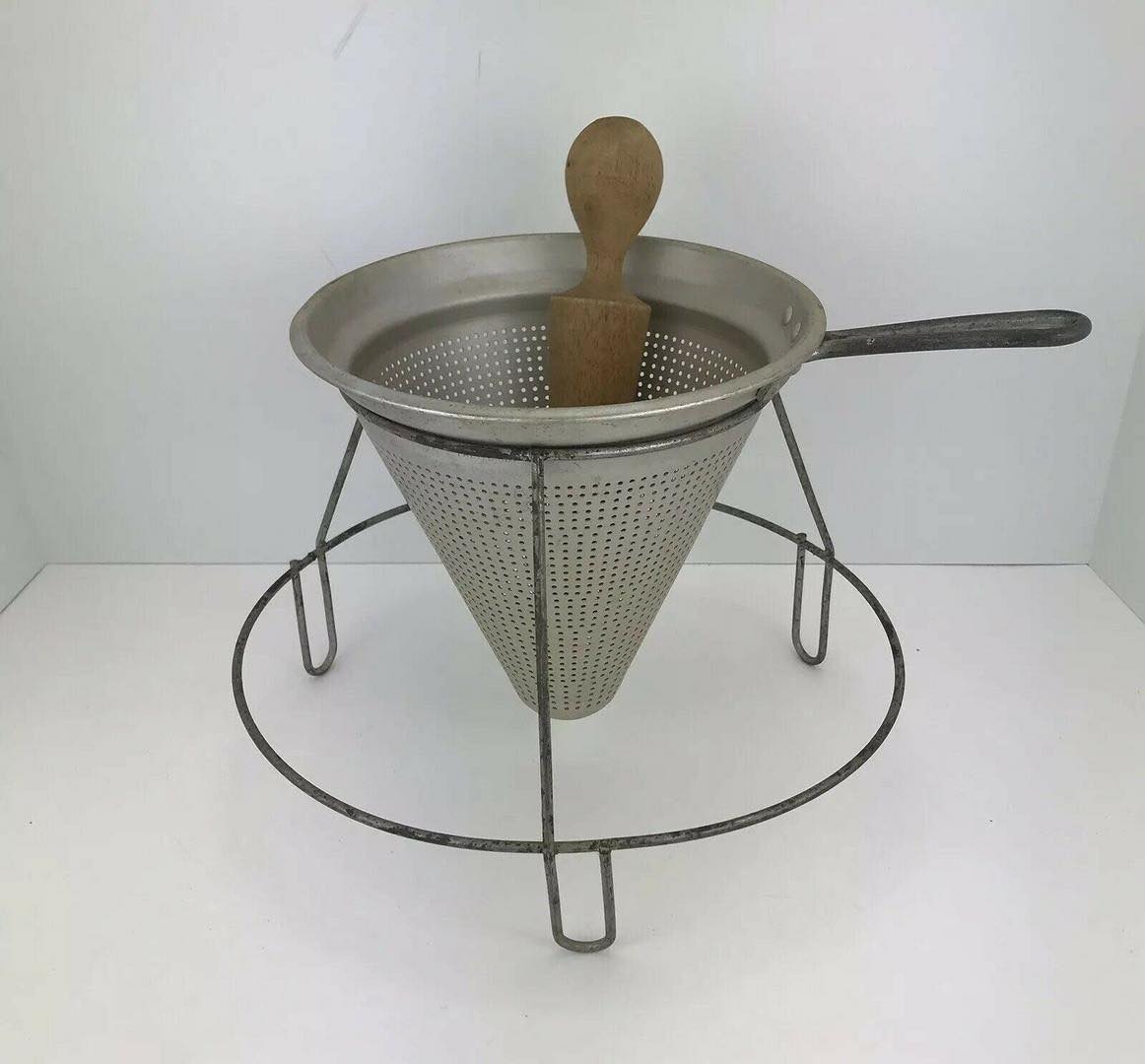
There’s something special about making your own tomato sauce from scratch — the aroma, the flavor, and the pride of knowing exactly what’s in it. But if you want that old-world smooth, velvety tomato sauce with no seeds, skins, or chunks, there’s only one tool that delivers: a cone strainer (also called a chinois or food mill cone).
This traditional tool is the secret weapon for serious sauce makers, and today, we’re going all in with a full tutorial and recipe to get the most out of it!
Why Use a Cone Strainer?
Unlike regular sieves or blenders, a cone strainer with a stand allows you to press hot, soft-cooked vegetables (like tomatoes) through ultra-fine holes, leaving behind skins, seeds, and pulp.
The result? A silky, restaurant-quality tomato sauce that’s perfect for pasta, pizza, lasagna, soups, and more.
Ingredients:
10 lbs (about 4.5 kg) ripe tomatoes (Roma or plum varieties work best)
1 medium onion, quartered
6 cloves garlic, smashed
1 tablespoon olive oil
1 teaspoon sea salt (or to taste)
1 teaspoon sugar (optional, for acidity balance)
A few fresh basil leaves or 1 tsp dried basil
½ teaspoon black pepper
Optional: 1 small carrot, peeled and chopped (helps reduce acidity naturally)
Step-by-Step Instructions:
Step 1: Prepare the Tomatoes
Wash the tomatoes thoroughly. Using a small knife, cut out the cores and slice each tomato in half. No need to peel or seed them — the cone strainer will take care of that.
Step 2: Simmer the Base
In a large pot, heat olive oil over medium heat. Add the onions, garlic, and optional carrot. Sauté for 5 minutes until fragrant, then add all the tomatoes. Cook uncovered for about 30–40 minutes, stirring occasionally, until the tomatoes break down completely and the mixture becomes juicy and soft.
Step 3: Use the Cone Strainer
Place your cone strainer over a large bowl or pot using the metal stand. Working in batches, ladle the cooked tomato mixture into the strainer. Use a wooden pestle or spoon to press the mixture through the fine holes. Continue pressing until all the juice and pulp are extracted, leaving the skins and seeds behind.
Next page :
ADVERTISEMENT
