
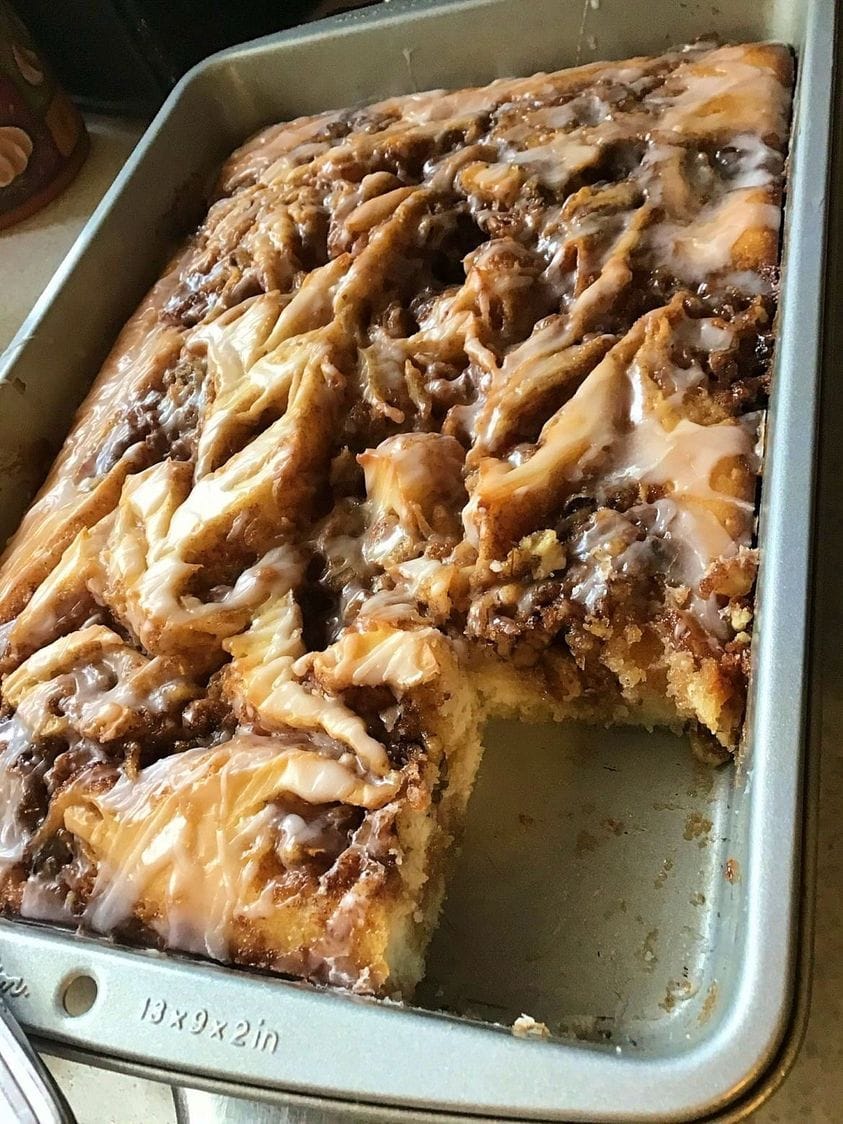
Welcome to your sweet journey into the realm of all things delicious! Diving deep into cake baking basics, you’ll learn that transforming simple pantry staples, like flour, sugar, and baking powder, into mouthwatering creations, involves a touch of science and a splash of art. Not only will you become an expert in accurately measuring ingredients and mixing batter, but also you’ll understand how to bake the cake to golden perfection. Imagine the aroma of a traditional cinnamon roll baking- a heavenly intertwine of sugary cinnamon and rustic dough. This enticing scent can fill your kitchen too, once you master the delightful art of cinnamon roll making. To top it off (quite literally), we’ll walk you through whipping up irresistibly smooth and creamy frosting, a sweet, tangy concoction that will elevate your cake to new, enticing heights. Get ready to amalgamate these techniques and create the ultimate sweetness indulgence: the Cinnabon Cinnamon Roll Cake. Brace yourself for a roller-coaster ride of succulent flavors and pleasant textures, all in the comfort of your own kitchen.
Cake Baking Basics
Understanding the Functions of Each Ingredient
When it comes to baking a cake, each ingredient has a critical role and understanding this can help enhance the taste and texture of the final product.
Flour: This is the foundation of the cake, providing the structure. It contains proteins that, when mixed and heated, turn into gluten and give the cake its consistency.
Sugar: Apart from adding sweetness, sugar is important in making the cake tender and moist by avoiding the formation of too much gluten. It also helps the cake to brown.
Baking Powder: This is a leavening agent that assists in rising the cake. As it combines with the wet ingredients, carbon dioxide is produced, causing the batter to rise and giving the cake a fluffy texture.
Butter: It enhances the flavor and gives the cake a creamy texture.
Eggs: These help bind all the ingredients together and provide moisture. The yolk helps enhance the flavor and makes it rich, while the whites lead to a lighter, fluffier cake.
Milk: Adds moisture and helps to carry the flavor of other ingredients.
Accurately Measuring Ingredients
In baking, being precise with measurements is critical. Even minor deviations can result in a cake that’s too dry, too sweet, or fails to rise.
Flour & Sugar: For dry ingredients like flour and sugar, use measuring cups or a digital scale. Be careful not to pack flour into the cup. Spoon it in lightly and level off the top with the back of a knife.
Baking Powder: Using measuring spoons, be sure not to heap the powder on the spoon but keep it level for an accurate measure.
Butter: Most butter wrappers are marked with measurements which can be used as guides. If using a measuring cup, press the butter into the cup to fill in any air pockets.
Eggs & Milk: Make sure to measure liquids at eye level for accuracy, using a clear measuring cup with distinct markings.
Mixing Batter Properly
The method you use to combine your ingredients is just as important as the precise measurement of those ingredients. Over or under-mixing can lead to a heavy or crumbly cake.
Always begin by whisking together your dry ingredients (flour, baking powder, etc), this ensures an evenly risen cake.
Start by beating the butter until creamy, then gradually add sugar while continuing to beat until the mixture is light and fluffy.
One at a time, add eggs, beating well after each addition to ensure they’re well incorporated.
Alternate between adding the flour mix and milk, beginning and ending with the flour. This prevents the mixture from curdling.
Baking to Perfection
The key to a perfect cake is knowing when it’s done. Not all ovens bake at the same rate, so start checking about 10 minutes before the recipe states.
Bake in a preheated oven. A cold start can lead to a dry cake.
Don’t open the oven door during the first two-thirds of the baking time; this can cause your cake to fall.
To check if done, insert a toothpick or skewer into the center of the cake. It should come out clean or with only a few crumbs sticking to it.
Once the cake is done, let it cool in the pan for about 10 minutes before transferring it to a wire rack to cool completely. This will prevent the cake from breaking.
Baking a cake involves science, precision, and a lot of love. Understanding each step will take you closer to baking the perfect cake!
Cinnamon Roll Making
Preparing the Dough
To start with the traditional cinnamon roll-making process, you will need to prepare your dough. Preheat your oven to 350°. Combine 3 cups of flour, 1/4 teaspoon of salt, 1 cup of sugar, 4 teaspoons of baking powder, and 1 1/2 cups of milk in a large bowl. Stir in 2 eggs and 2 teaspoons of vanilla. In a separate bowl, melt 1/2 cup of butter, then mix it into your dough until thoroughly blended.
Creating the Cinnamon-Sugar Filling
Next, create a cinnamon-sugar mixture to fill your rolls. Combine 1 cup of softened butter (2 sticks), 1 cup of brown sugar, and 2 tablespoons of flour in a bowl. Once these are mixed together, add in 1 tablespoon of cinnamon. This sugar and spice blend will give that typical, irresistible cinnamon roll flavor.
Shaping and Filling the Dough
Now it’s time to shape your dough. Take your dough mixture out, flour your working surface, and roll out the dough into a rectangle, about 1/4 inch thick. Then apply the filling evenly across the surface of the dough. Be sure to leave a margin around the edges to keep the filling contained when rolling.
Start from the longest edge and roll the dough tightly towards the other side, pinching the edges as you go to create a dough log. Ensure this is tight so your cinnamon rolls hold their shape.
Preparing for Baking
Cut your roll into slices approximately two inches thick. Instead of a traditional cinnamon roll shape, you will arrange these round pieces in your baking pan, creating what will morph into a cinnamon roll cake.
Baking the Cinnamon Roll Cake
Bake your cinnamon roll cake at 350° for about 28-32 minutes or until a toothpick inserted in the center comes out clean.
Creating the Glaze
While your cinnamon roll cake is baking, create a creamy glaze. Mix together 5 tablespoons of melted butter, 2 teaspoons of vanilla, and 5 tablespoons of milk. Gradually stir in 2 to 3 cups of powdered sugar until your glaze reaches your desired consistency.
As soon as the cake comes out of the oven, drizzle this glaze over the top. This will seep into the crevices, adding another layer of decadent sweetness.
Just like traditional cinnamon rolls, the key to a delicious cinnamon roll cake lies in the balance between a rich, buttery dough, a spiced sweet filling, and a scrumptious glaze to top it off. The difference mainly lies in the technique of turning a rolled dough into a cake instead of individual rolls. Enjoy the traditional flavors in a new form!
Frosting & Icing
Making the Perfect Cream Cheese Frosting
To make the perfect cream cheese frosting for your Cinnabon Cinnamon Roll Cake, you’ll first need to gather the necessary ingredients. These are: 4 oz softened cream cheese, 3 cups powdered sugar, 1/4 cup softened butter, and 1 tsp vanilla. The cream cheese and the butter should be room temperature to prevent any lumps in your frosting.
Start by adding the cream cheese and butter to a large mixing bowl. Using an electric mixer, beat these two ingredients together until they are well combined and smooth. It is important to ensure no lumps remain, as these will give the frosting a gritty texture.
Achieving a Smooth, Creamy Texture
Once the cream cheese and butter are well mixed, gradually start adding in your powdered sugar, about half a cup at a time. Continue mixing with your electric mixer as you add in the sugar to keep your frosting smooth and well combined. Powdered sugar not only gives the frosting its sweetness but also helps in achieving that smooth, creamy texture that perfectly complements the rich flavors of the cinnamon roll cake
For Complete Cooking STEPS Please Head On Over To Next Page Or Open button (>), and don’t forget to SHARE with your Facebook friends.
ADVERTISEMENT
